
How Much Does a Robot Mower Cost to Run?
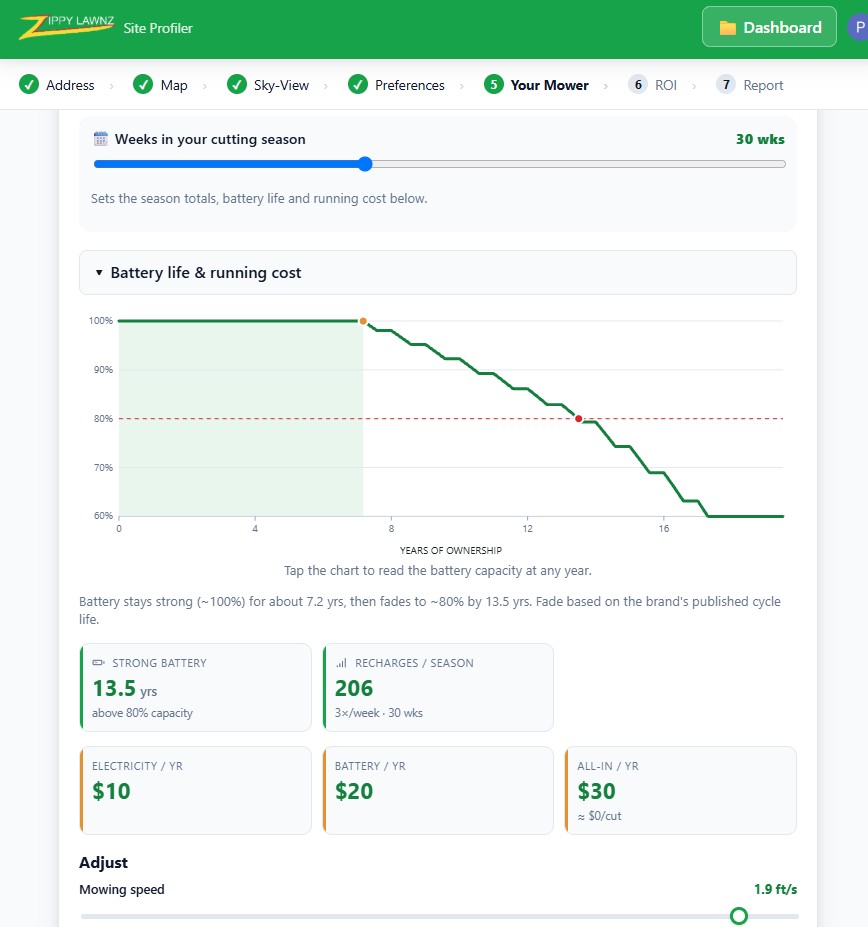
Robot mowers have a reputation for being expensive to buy — but almost nobody talks about what they cost to run. The good news: it’s tiny. The mower spends most of its time trickle-charging a small battery, and the numbers work out to a few dollars a month for most lawns.
Here’s the honest breakdown, and how to get the exact figure for your lawn and your electricity rate.
The one number that matters: kWh per year
A robot mower’s running cost is just two things multiplied together:
Electricity cost per year = energy used (kWh) × your rate ($/kWh)
A typical residential robot mower draws only 30–90 watts while cutting, and it cuts a little and often rather than in one long, power-hungry session. Add up a full season of charges and most home lawns land somewhere around 30 to 80 kWh per year — roughly what a modern fridge uses in a month or two.
At the US-average electricity rate of about $0.18/kWh, that’s $6–$15 a year. Even in high-cost states around $0.35/kWh, you’re still looking at $10–$30 a year. It really is that cheap to run.
Why it’s so low
Three reasons a robot mower barely moves your power bill:
- Small battery, frequent top-ups. These aren’t riding mowers. The pack is a fraction of a power tool battery, and the dock trickle-charges it between short runs.
- Little-and-often mowing. Because the robot keeps grass short continuously, each pass removes only a sliver — so it does less work, and uses less energy, than a gas mower hacking through a week of growth.
- No fuel, no oil, no trips to the gas station. The “fuel” is a few kWh of grid electricity, and that’s the whole story.
Don’t forget total cost of ownership
Electricity is the smallest line item. To compare a robot mower honestly against a weekly lawn service, add up the whole picture over several years:
- The mower (one-time purchase)
- Optional professional install (one-time)
- Electricity (a few dollars a month — the number above)
- A battery replacement or two over a 6–10 year horizon ($220–$720 per pack, depending on model)
- Modest service and support
Stacked against a weekly service that charges every single week and raises prices with inflation, the robot usually wins within 2–4 years — and then keeps mowing for the cost of a coffee or two per month.
Get the exact number for your lawn
Averages are a starting point, but your lawn size, mowing schedule and local electricity rate all move the total. Our free lawn check measures your actual grass from satellite, sizes the right mower, and runs the full total cost of ownership — including the electricity it’ll use, priced at your kWh rate, next to what a weekly service would cost over the same years.
No sales pitch, no account needed to start — just the real numbers before you spend a dollar.
Frequently asked
How much electricity does a robot mower use per year?
A typical residential robot mower uses roughly 30–80 kWh per year — similar to a modern refrigerator's monthly draw spread across a whole season. At the US-average rate of about $0.18/kWh that's roughly $6–$15 a year in electricity.
Is a robot mower cheaper than a lawn service?
Usually yes, over time. A weekly service runs $30–$100+ per visit and rises with inflation, while a robot mower is a one-time purchase plus a few dollars a month to run. Most owners pass break-even within 2–4 years, then mow essentially for free.
Do I need to replace the battery, and what does that cost?
Most robot mower batteries hold strong capacity for several years and gradually fade after that. A replacement pack typically runs $220–$720 depending on the model. Factoring one replacement over a 6–10 year horizon is the honest way to compare true cost of ownership.
Keep reading
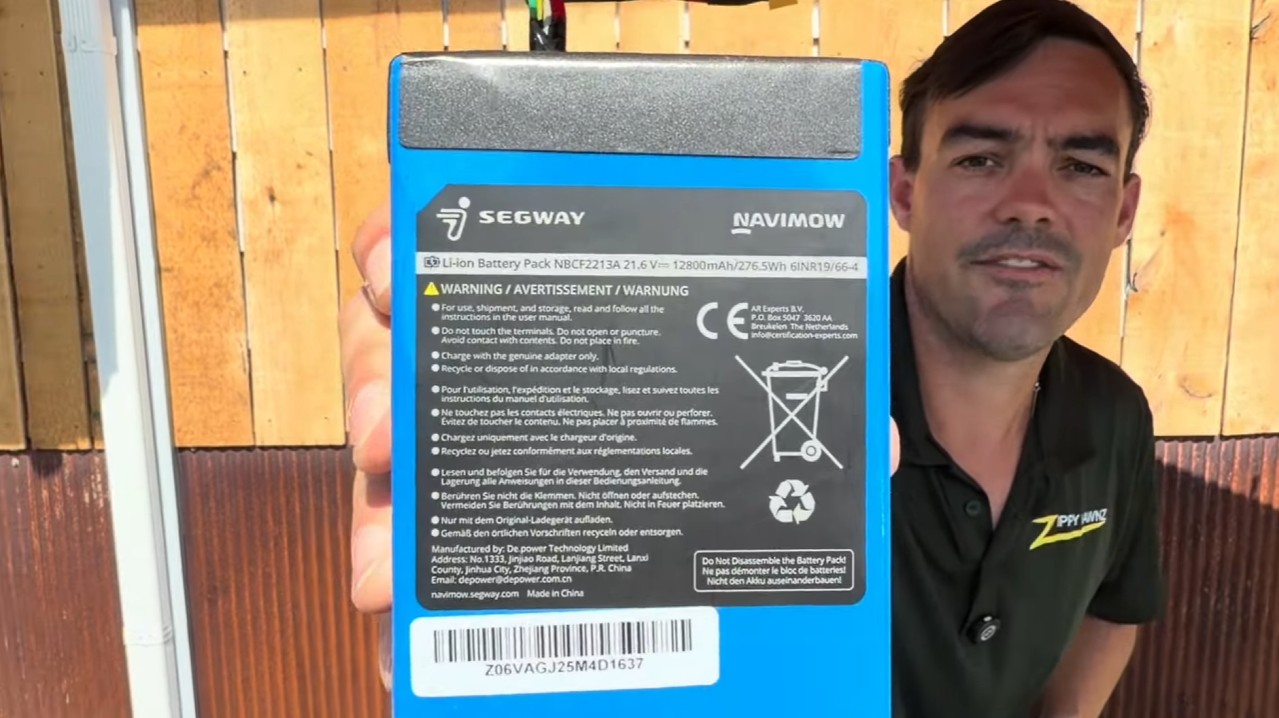 Buying GuidesHow Long Does a Robot Mower Battery Last? We Ran the NumbersA robot mower's lithium battery can outlast the mower on a small lawn — or fade in about 5 years on a big one. Here's the real cycle math, by lawn size.
 Buying GuidesAre Robot Mowers Worth It? We Ran the Numbers (2026)Are robot mowers worth the money? The honest math on cost vs a lawn service, the time you get back, the hidden costs — and the lawns where they're NOT worth it.
 Buying GuidesRobot Mower vs. Lawn Service: Cost, Lawn Health & ReliabilityWeekly lawn service vs a robot mower that cuts daily — the real cost math, why little-and-often grows a thicker lawn, and a third option most people miss.
Explore the system
The mowers and pages behind this topic — see them sized to your yard.