
The design used to bend around the mower.
Now the mower bends around your design.
For decades, maintenance set the terms — wide sweeps, mow-friendly radii, turf a 21-inch deck could reach. Autonomous mowing quietly removes those constraints, and that changes the canvas you get to work on.
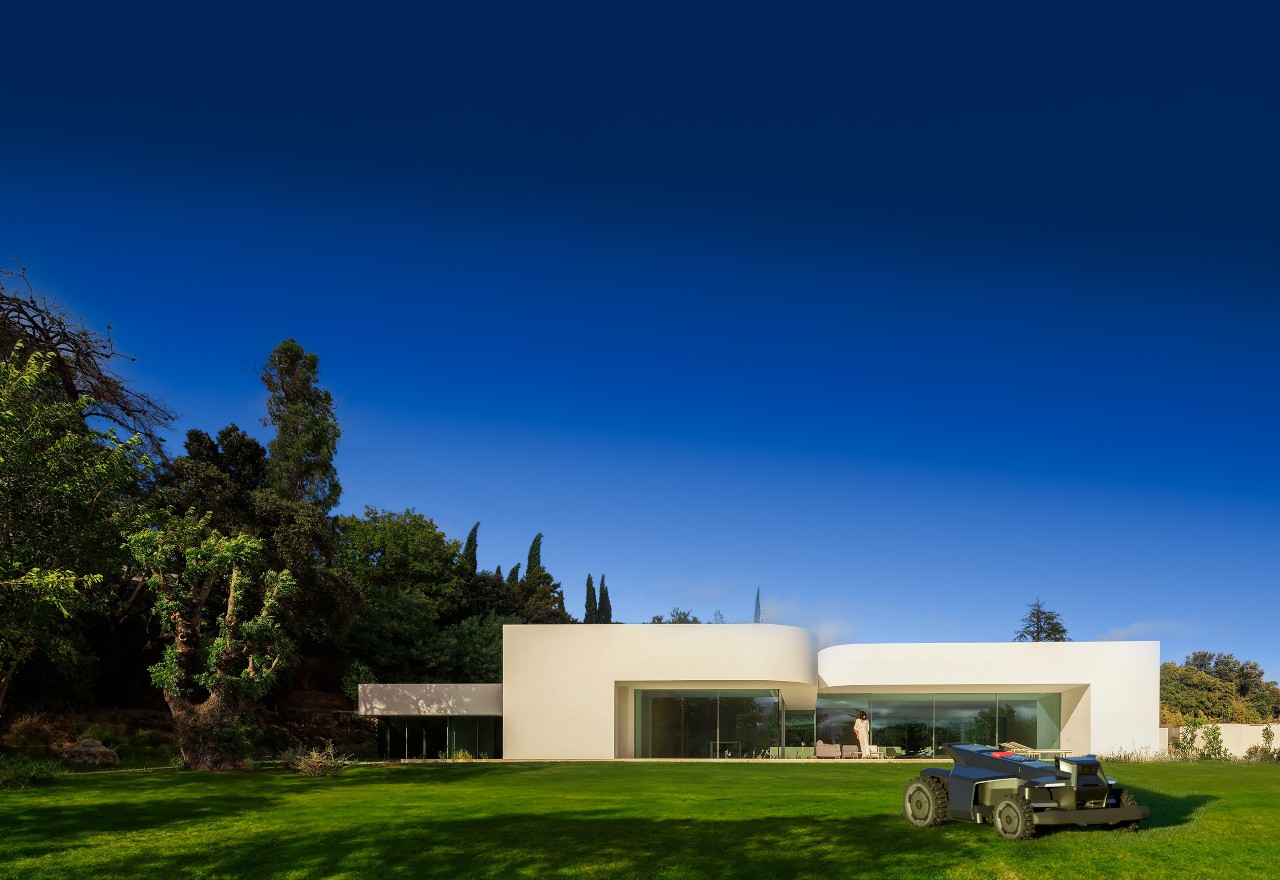
The mower used to dictate the design. Now the design dictates the mower.
- Straight runs and broad turning radii
- Turf simplified for deck access
- Slopes avoided or hardscaped over
- Crew noise & schedule dictated layout
- Organic, flowing bedlines welcome
- Turf shaped by intent, not access
- Slopes become usable design features
- Silent, autonomous, on its own schedule
Modern units have dropped the buried boundary wire. Knowing the mechanism lets you design with — not around — the technology.
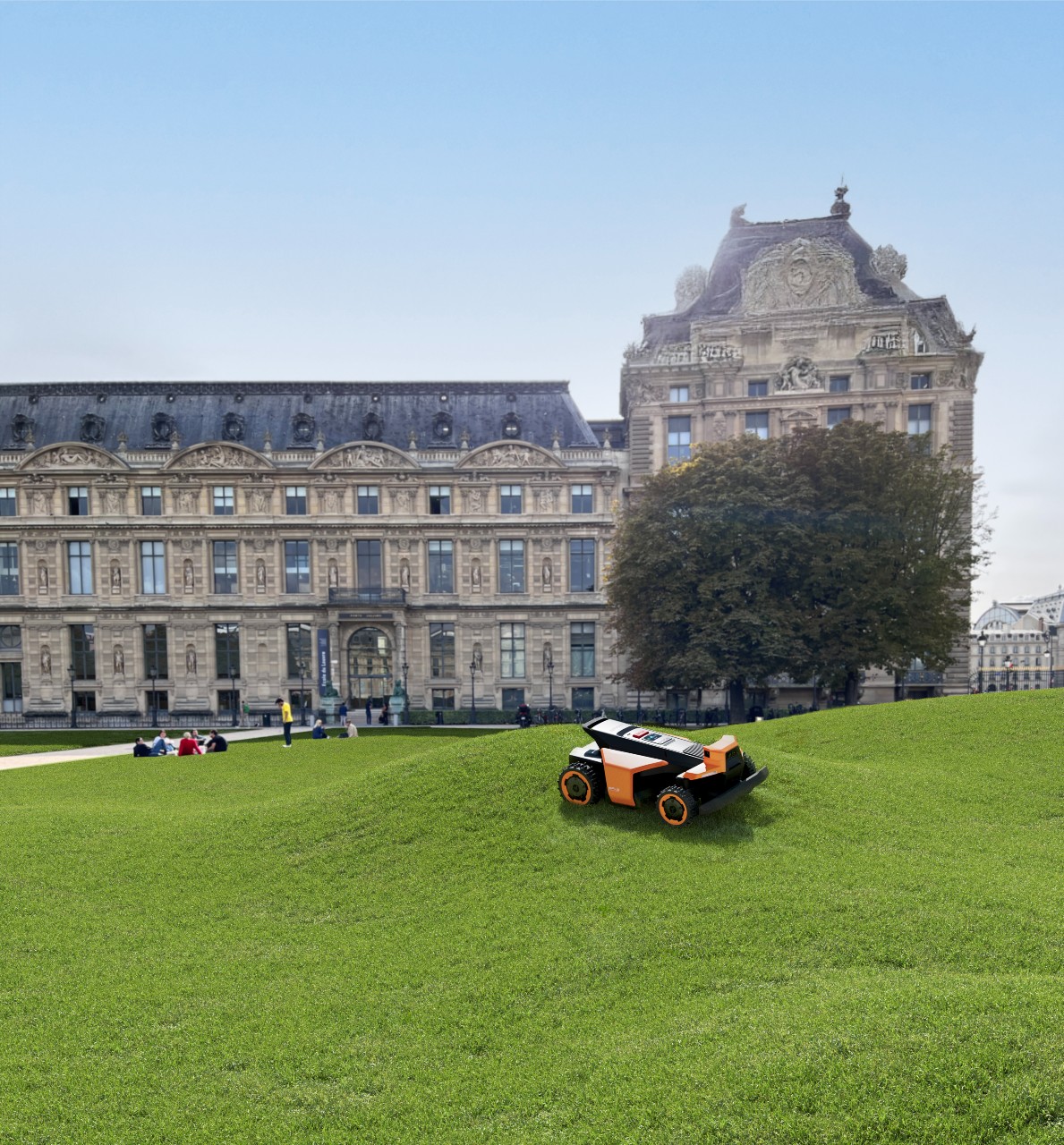
Slopes become usable lawn, not problems to hide
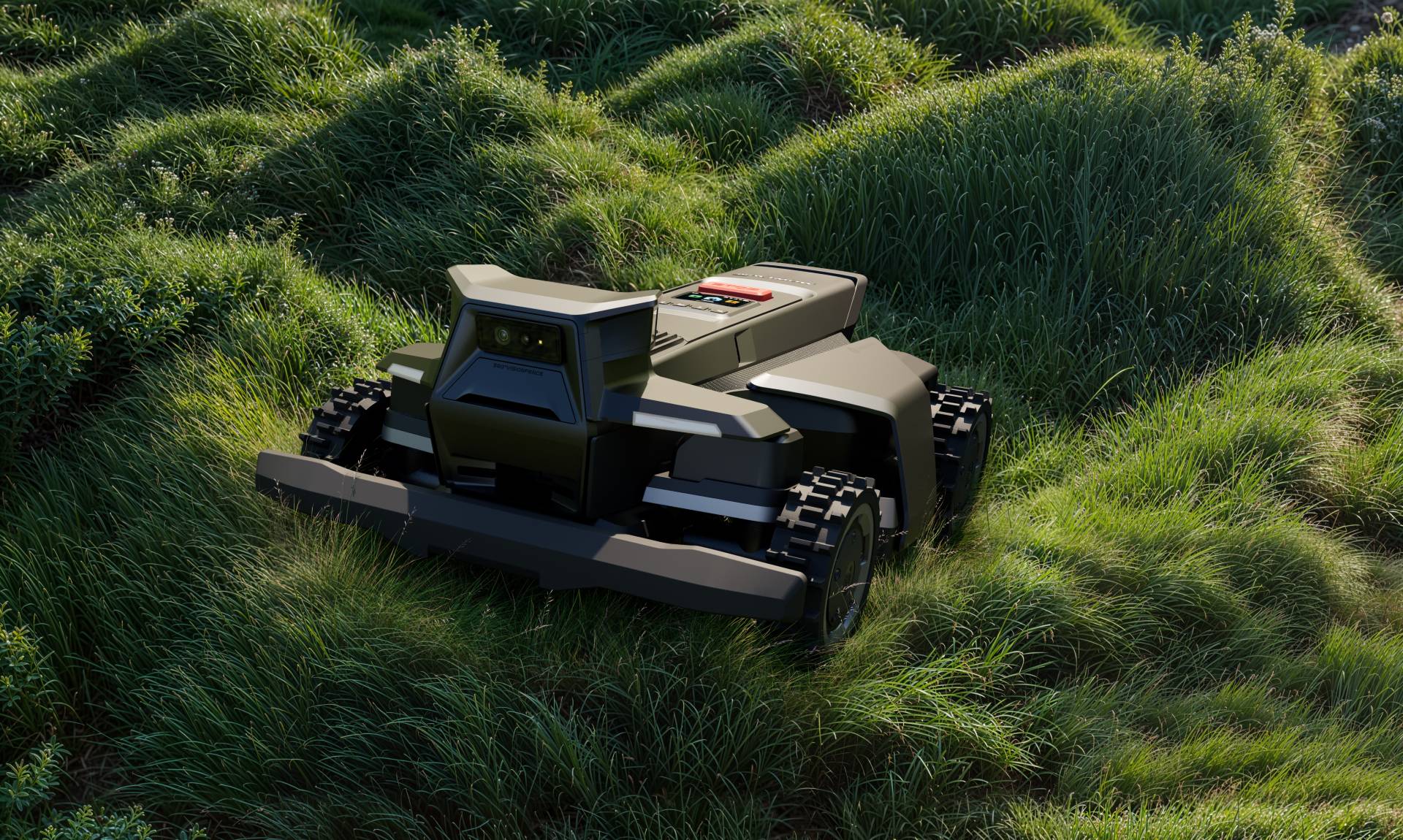
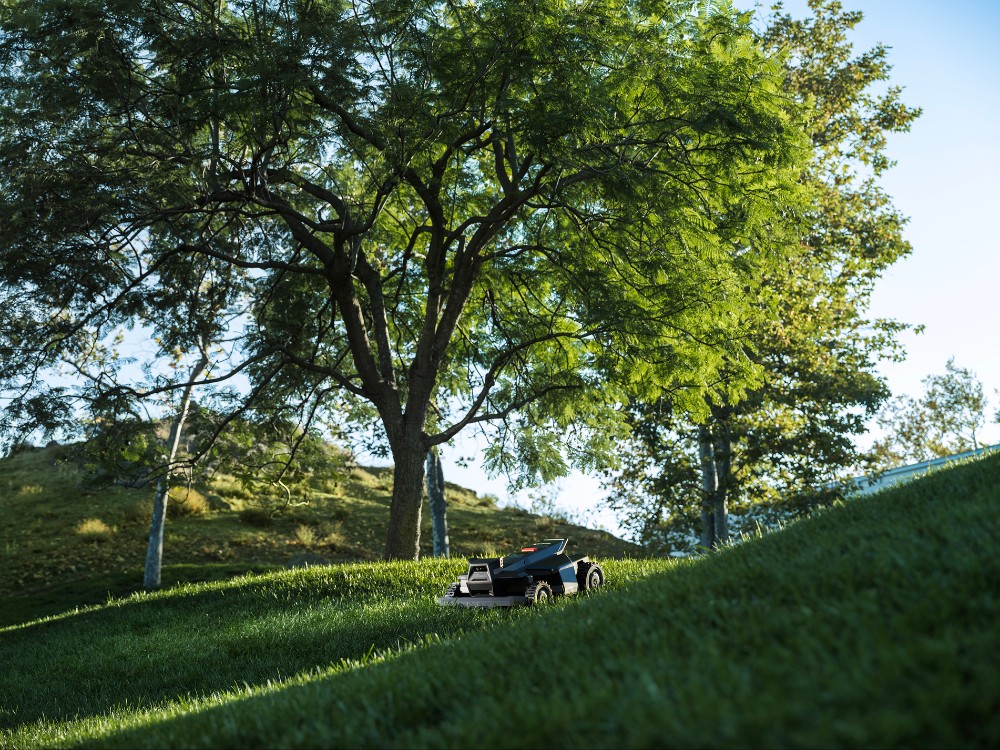
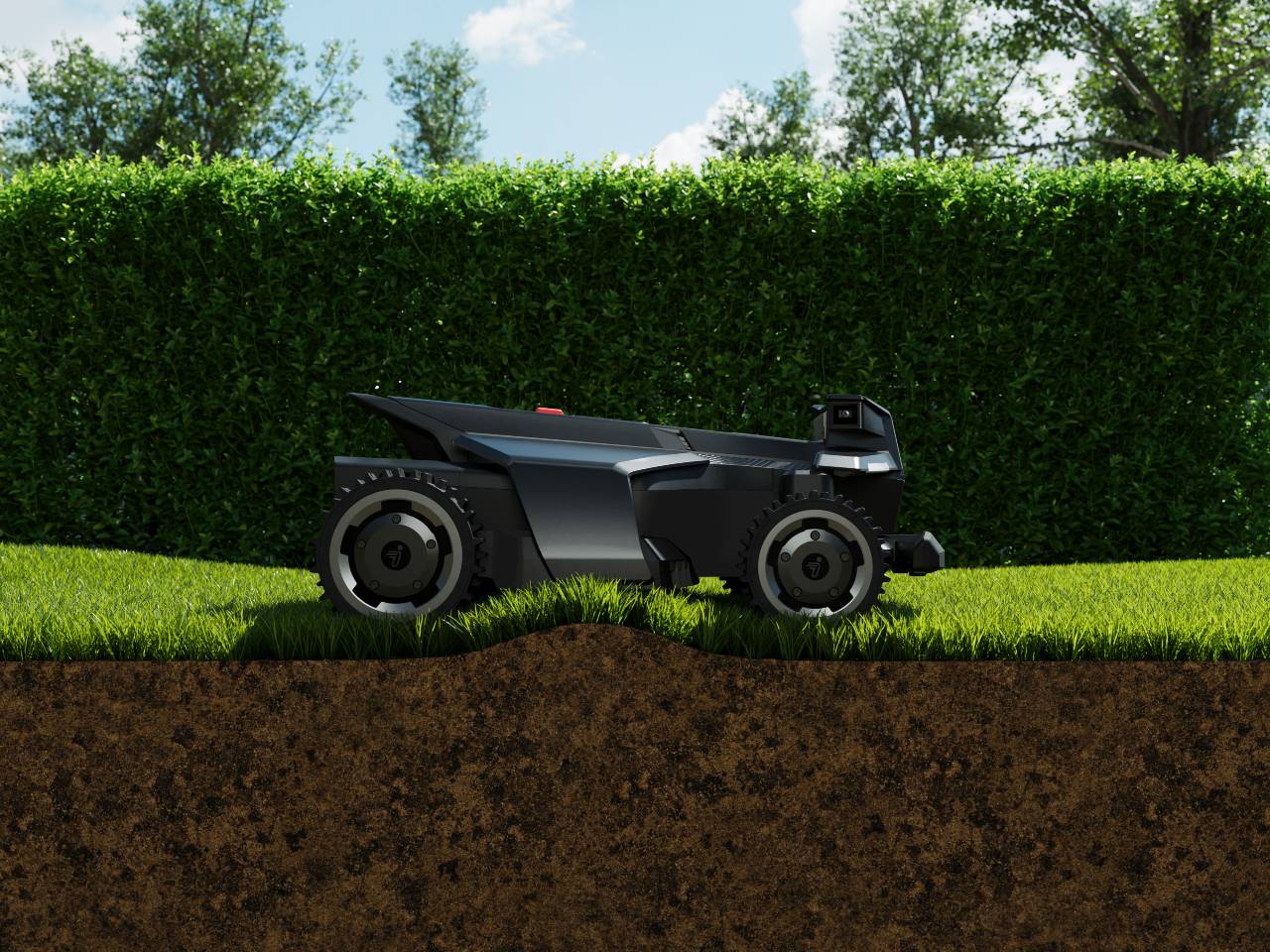
Grades that once forced retaining walls, groundcover, or rip-rap can stay as turf. AWD units follow the natural contour — so sloped lawns, berms, and garden grades read exactly as drawn.
Trims that drove the layout, gone. Many hardscape decisions exist only to make mowing or trimming possible. Autonomy retires them.
One property, many lawns — each on its own terms
Front, rear, side, and courtyard turf mapped as separate areas within a single plan — each with its own schedule and cutting height. Because boundaries are software, the planting plan and the mowing plan are authored as one. Protect the delicate, expose the durable.
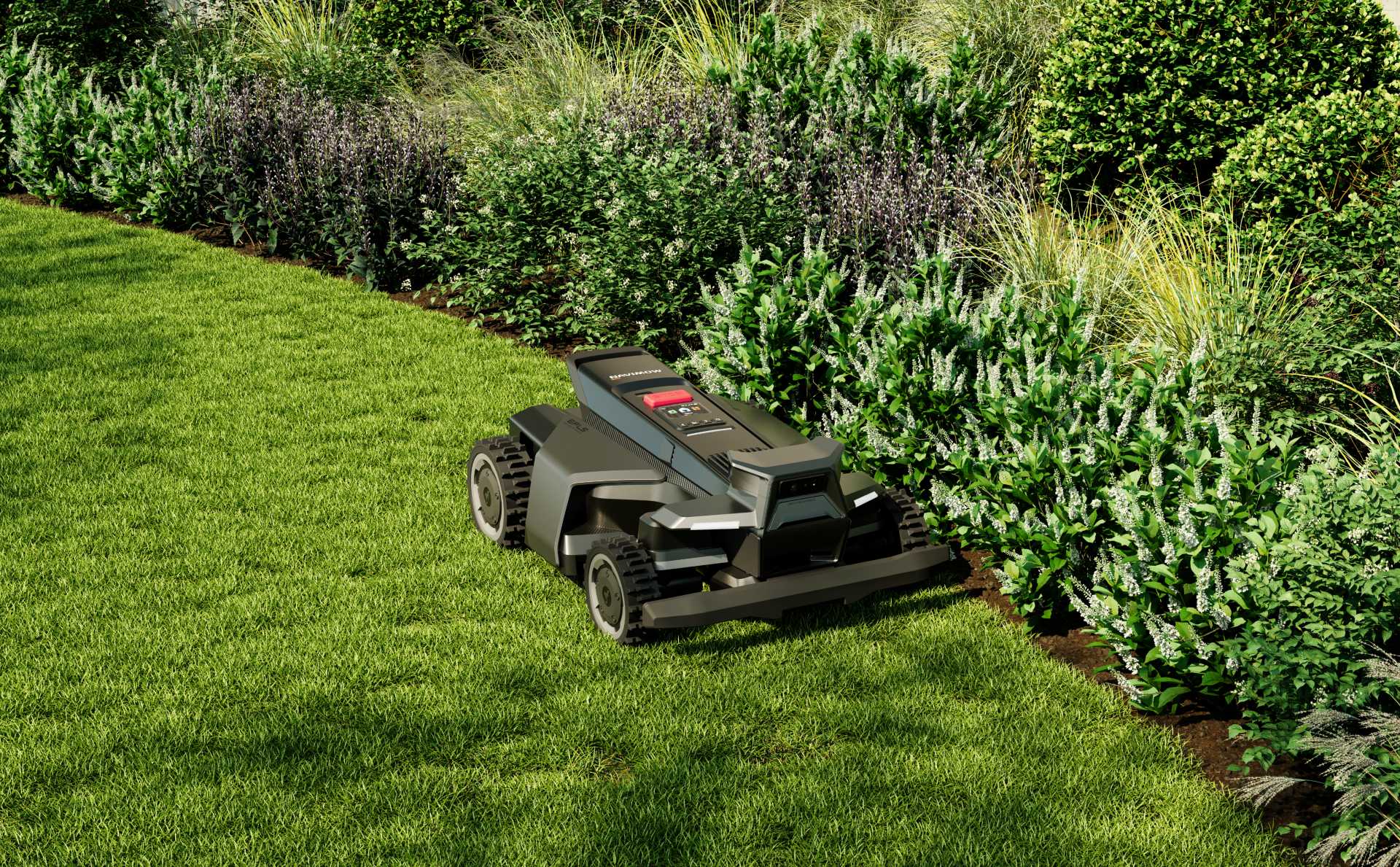
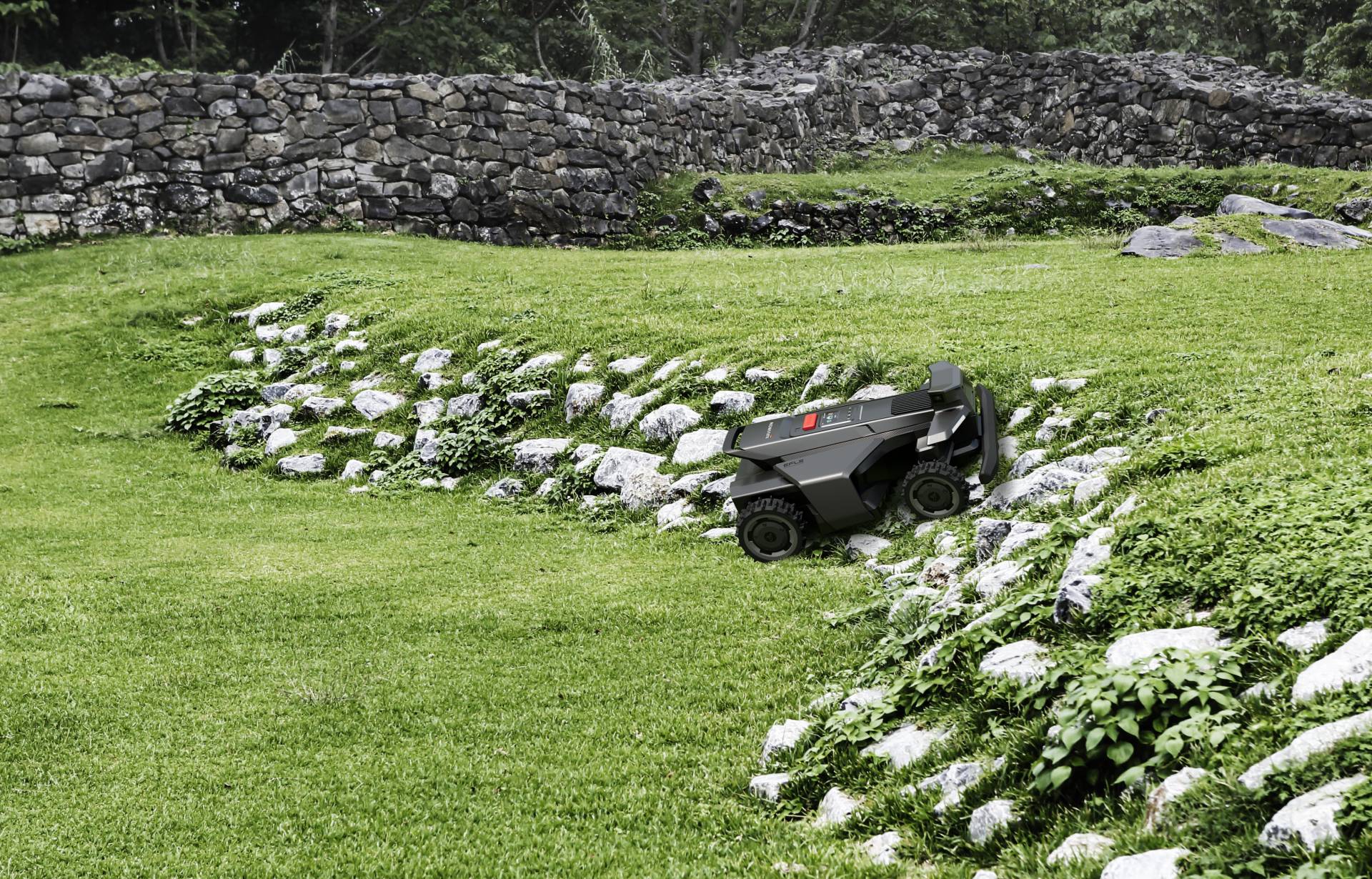
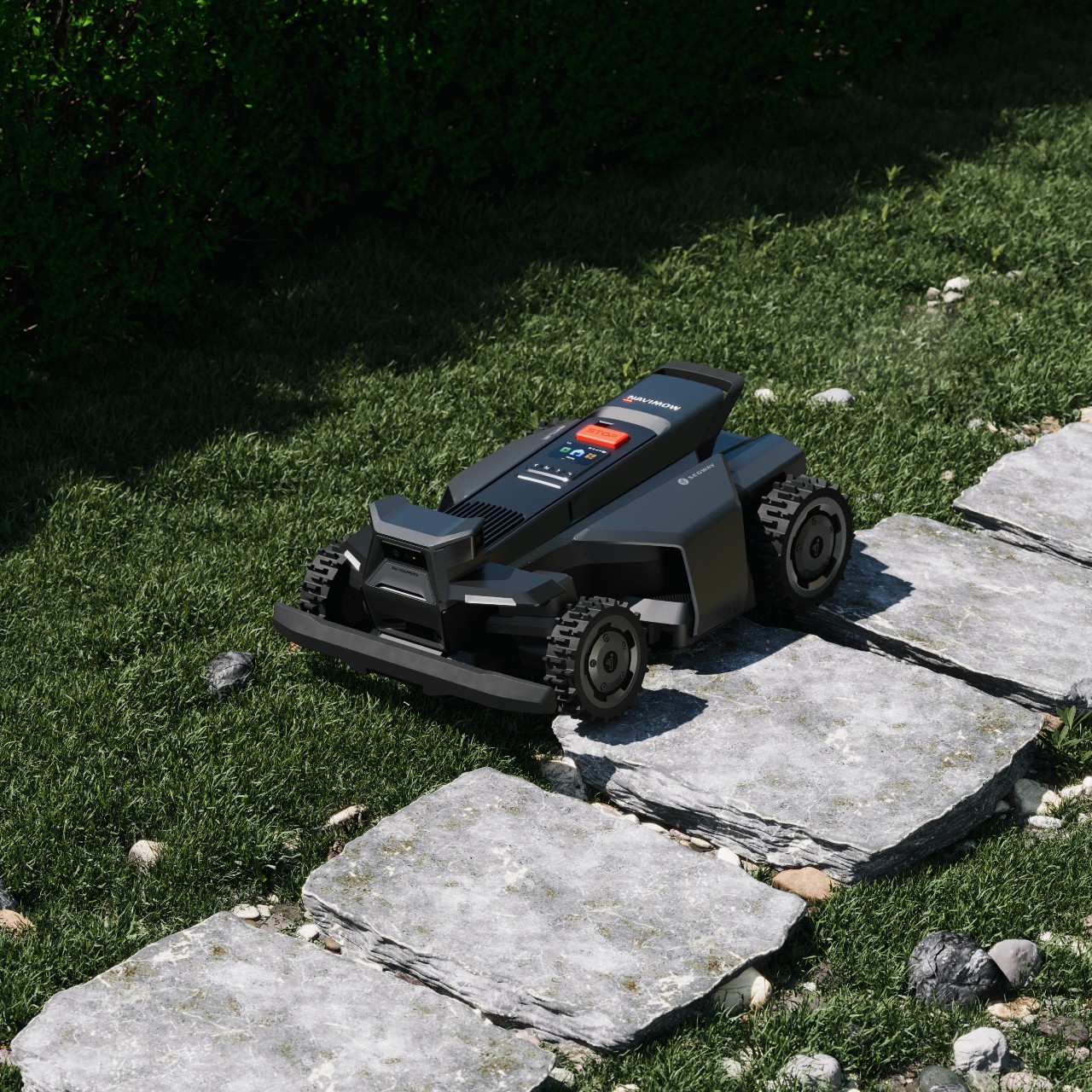
Soft edges and flush transitions the mower eases into — authored with the planting plan, not fought against.
Outdoor rooms that are never interrupted
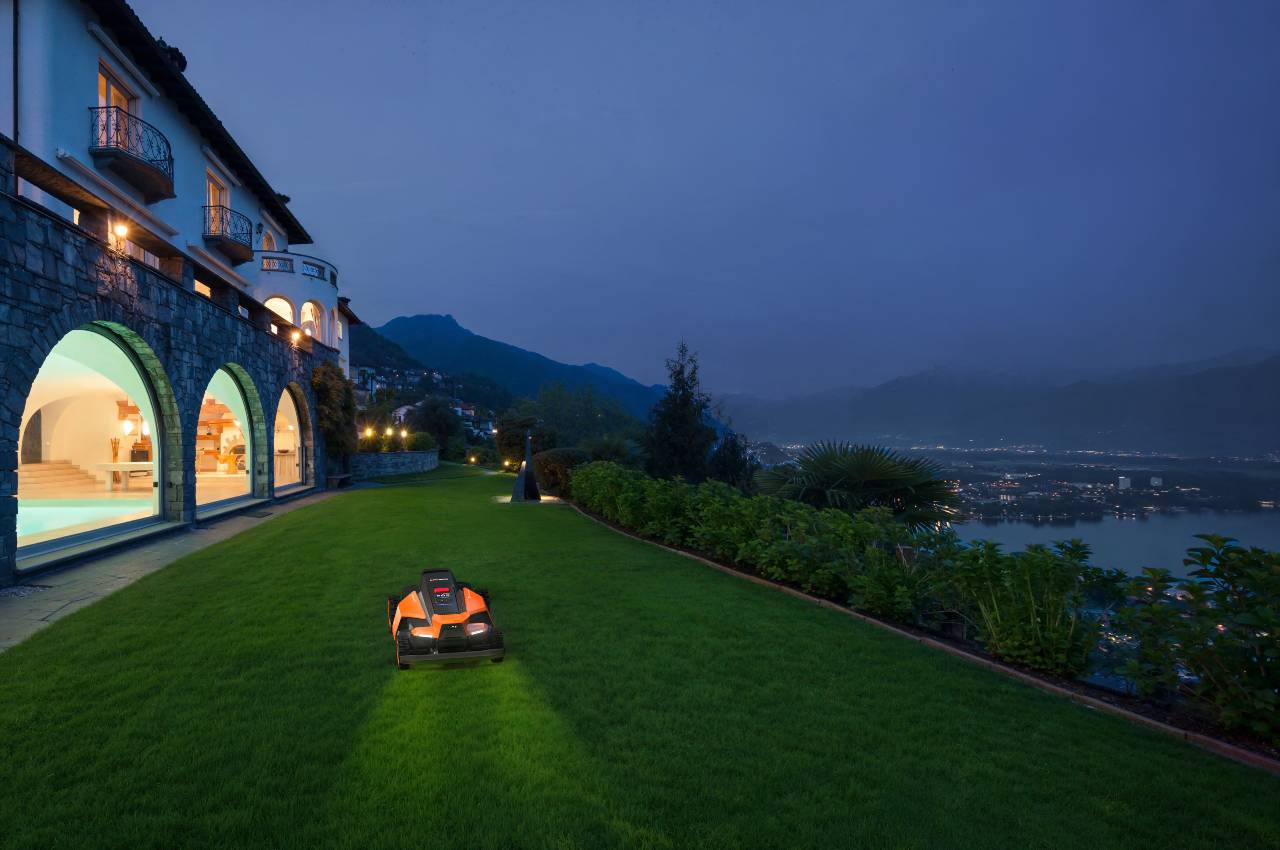
No two-stroke roar, no fumes, no crew window. The maintenance layer becomes invisible — so patios, dining terraces, and quiet gardens stay usable.
- Near-silent — runs during a dinner party
- Battery-electric — zero on-site emissions
- Mows at dawn or overnight, off your schedule
What to spec so it works on day one
A handful of provisions, designed in early, separate a flawless install from a retrofit headache.
Where the technology still has edges
Credibility comes from naming the limits. None are dealbreakers — they're design inputs.
Engineered together for fully automated upkeep
Plan the landscape around the mower from day one and the whole lawn is maintained autonomously — no string-trimming, no gas, no missed strips. That's a system we build with you.
- Co-design the plan We tune edges, widths, transitions, and grades so every blade is reachable — zero string-trimming by design.
- Spec the system Dock, RTK base, virtual zones, and per-zone heights mapped to your design as one maintenance layer.
- Hand off, automated The client gets a self-maintaining landscape that keeps your composition intact season after season.
Designing for robotic mowing — FAQ
Can robotic mowers handle sloped and contoured lawns?
Yes — all-wheel-drive units follow the natural contour and hold grades that used to force a retaining wall, groundcover, or rip-rap. That means berms, garden grades and sloped lawns can stay as usable turf and read exactly as drawn, instead of being hardscaped over to make them mowable. Very steep or unstable grades still have limits, so we validate slope and traction per site.
Do robotic mowers still need a buried boundary wire?
The modern units we spec do not. Boundaries are defined in software (RTK positioning plus on-board vision), so the mowing plan is virtual and editable. For you that means the planting plan and the mowing plan can be authored as one layer — no perimeter wire to trench, and zones you can reshape as the design evolves.
How do I design a landscape to be robot-mower friendly?
Design with the mechanism, not around it: flush turf-to-hardscape transitions (no lips or deep gravel), soft navigable radii instead of sharp inside corners, gate and corridor widths that clear the unit, a discreet dock on level ground near power, and a clear-sky spot for the RTK base. Organic, flowing bedlines are welcome — the mower follows intent, not a 21-inch deck's turning radius.
What has to be specified into the plan for autonomous mowing?
Six provisions, designed in early: a dock with GFCI power on level ground; an RTK reference mount with clear sky; Wi-Fi or cellular reach to the dock; minimum clearances and gate widths; flush edge transitions; and drainage that keeps routes dry. Get those in the drawing set and the install is flawless on day one instead of a retrofit headache — we co-spec them with you.
What are the limitations of robotic mowers for landscape design?
They're honest design inputs, not dealbreakers: very tight pinch points (sub-2-ft gaps, sharp inside corners) can strand a unit; loose or deep media and muddy low spots reduce traction; heavy leaf or fruit drop still needs periodic crew cleanup; and very dense canopy can degrade the RTK signal, so base placement matters. Name them early and design around them.
Design the maintenance out of the landscape
Map a project from satellite in two minutes — we'll show you where the mower frees the design, and co-spec the system so the lawn maintains itself, on your terms.